When installing large LED screens and stage lighting systems on a mobile stage, the available performance space is only one part of the design. The load-bearing performance of the roof wings, equipment suspension positions and hydraulic lifting arrangements also need to be considered.
For event production companies planning to install LED displays, lighting hoists and other suspended equipment, the compatibility between the stage structure and the equipment configuration is particularly important.
HUAYUAN conducted a series of roof wing load tests on a 10 m gooseneck mobile stage trailer, covering different suspension positions and hydraulic lifting under load. These tests provide practical reference information for LED screen and stage lighting configurations on mobile stages.
When installing LED screens, stage lighting and other suspended equipment, it is not enough to simply consider where the equipment will be mounted.
Equipment weight, suspension positions and load distribution across different suspension points all need to be considered in relation to the stage structure.
This is particularly important for large LED displays and multiple stage lighting hoists, where the loading conditions at different positions along the roof wing can vary.
For mobile stage manufacturers, roof wing load capacity is therefore an important consideration when designing structures for different event equipment requirements.
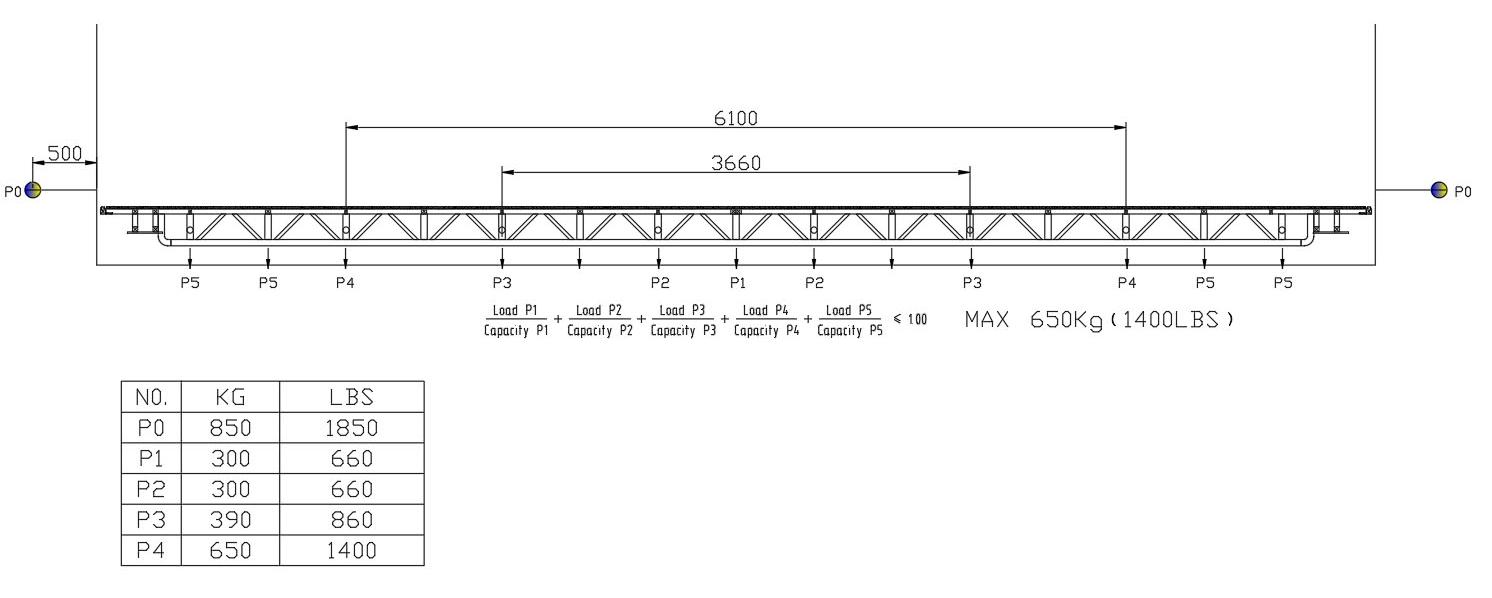
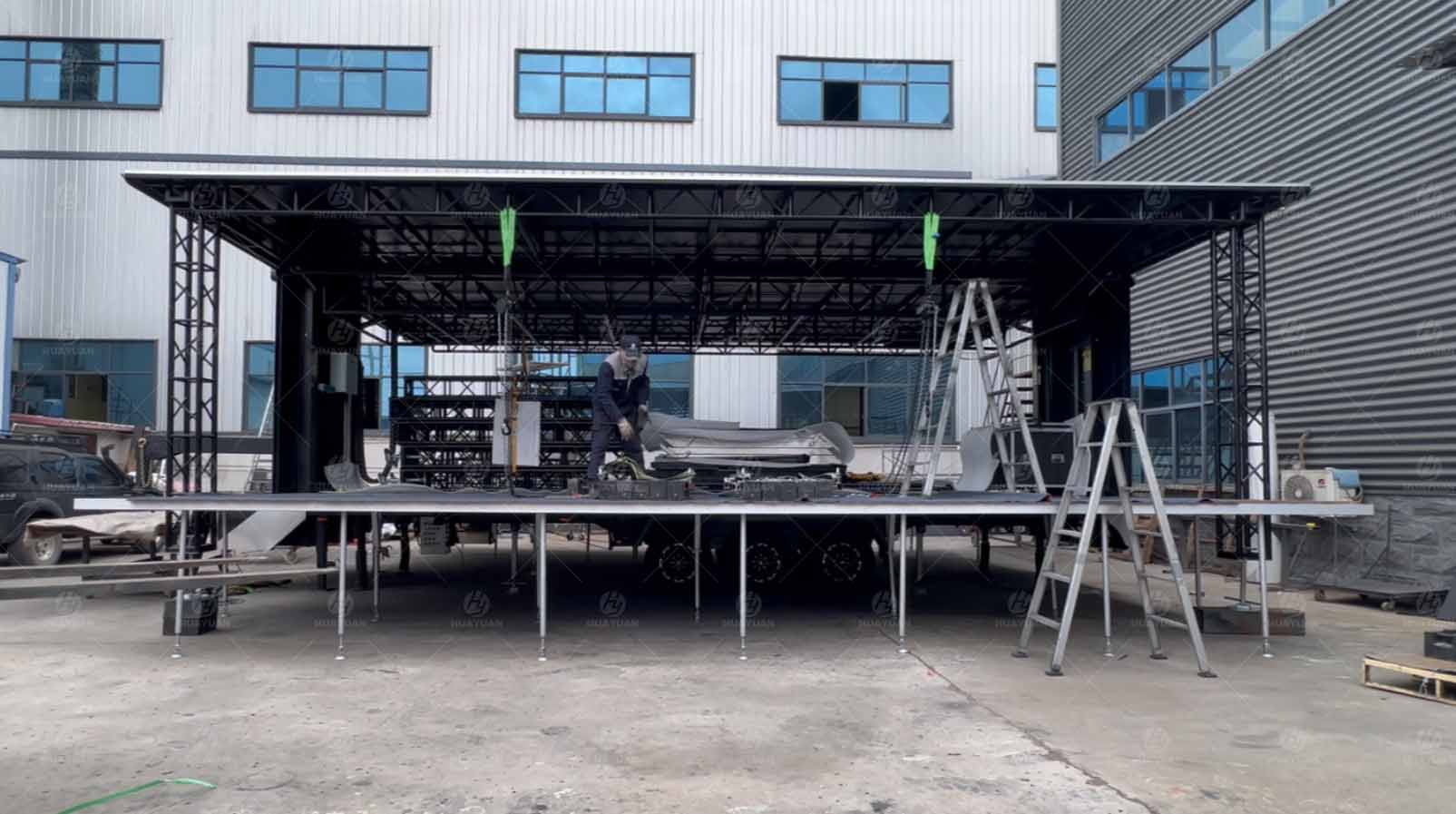
To evaluate the loading performance at different suspension positions, HUAYUAN carried out load tests along the outer edge of the folding roof wing on a 10 m gooseneck mobile stage trailer.
Four positions, P1 through P4, were selected for testing. Different loads were applied to simulate various equipment suspension arrangements.
During the tests, the combined loads across two suspension points reached 600 kg, 800 kg and 1,300 kg. No obvious visible deformation was observed on the roof wing during the loading process.
These loading configurations were also referenced against different LED screen suspension applications:
600 kg: Approximately 20 m² LED screen suspension configuration
800 kg: Approximately 27 m² LED screen suspension configuration
1,300 kg: Approximately 43 m² LED screen suspension configuration
These test examples provide practical reference information for configuring larger LED displays and related suspended equipment.
Besides static load-bearing performance, the installation method for stage lighting equipment is another important consideration in mobile stage design.
For events requiring multiple lighting hoists, installing the equipment before raising the roof wing can reduce the amount of elevated installation work required after lifting.
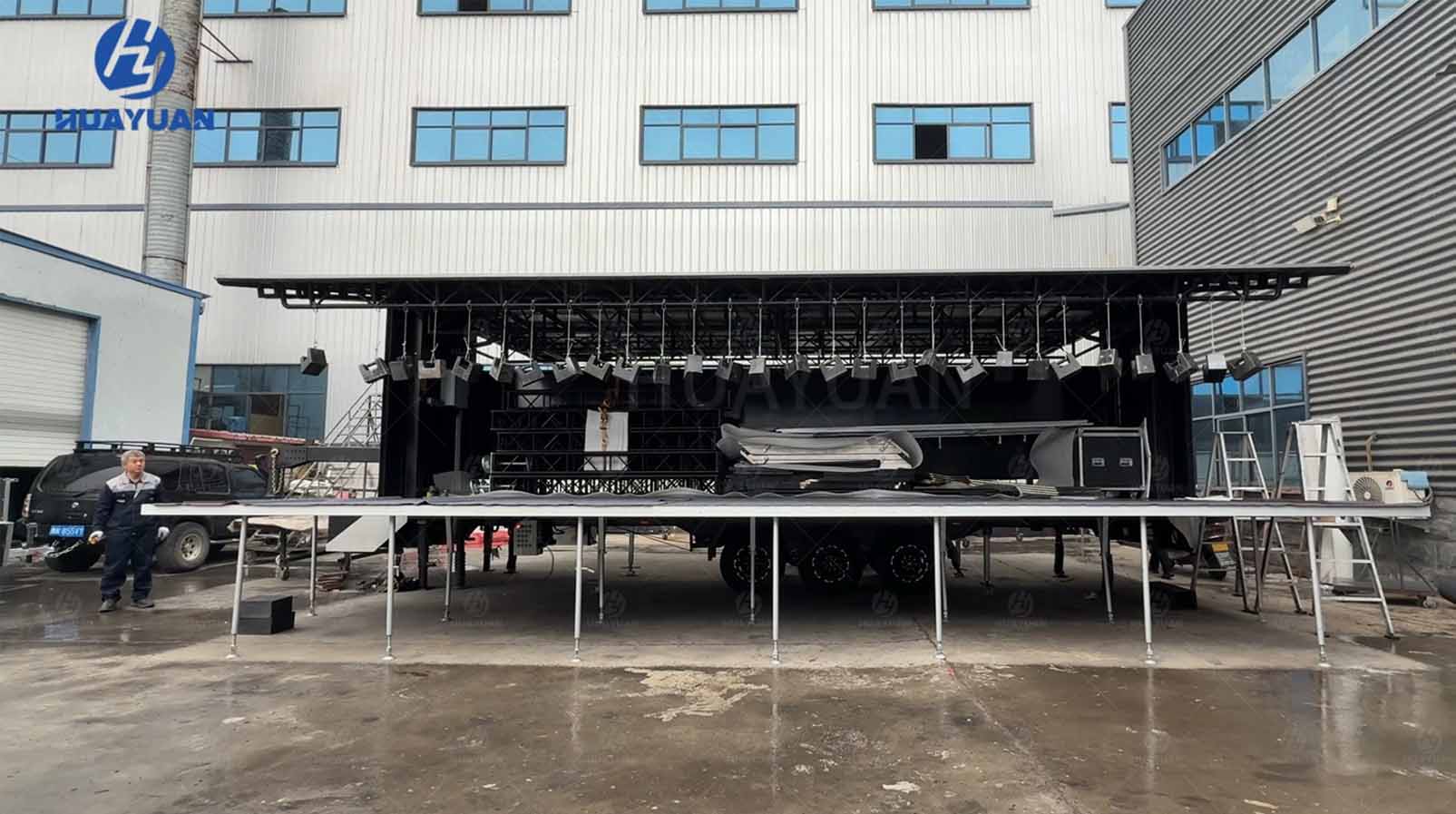
To examine this arrangement, HUAYUAN conducted a dynamic lifting test with a 650 kg suspended load.
The test involved attaching the load to the roof wing before operating the hydraulic system to raise it. The roof wing successfully completed the lifting operation with the 650 kg load suspended.
The 650 kg test weight represents the approximate weight of at least ten lighting hoists, providing a practical reference for pre-installing multiple lighting devices.
This arrangement is particularly relevant to music festivals, outdoor concerts and other mobile stage applications requiring multiple lighting fixtures.
Before purchasing a mobile stage, event organizers, stage rental companies and equipment integrators should identify their equipment requirements.
LED Screen Configuration
Consider the screen dimensions, weight, supporting frame and intended suspension arrangement.
Stage Lighting Configuration
Identify the number of lighting fixtures, individual equipment weights, hoist specifications and planned suspension positions. If the lighting hoists need to be installed before the roof wing is raised, this requirement should also be discussed in advance.
Compatibility Between the Stage Structure and Equipment
Different equipment combinations create different suspension requirements. The manufacturer needs to consider equipment weight, suspension positions and the specific stage structure when determining a suitable configuration.
For customers who already own LED screens or lighting equipment, existing product specifications and equipment layout drawings can be provided to HUAYUAN for customized mobile stage design and configuration.
HUAYUAN specializes in mobile stage design and manufacturing, providing customized solutions based on customers' LED display systems, stage lighting equipment and event requirements.
Whether a project involves large LED screen suspension, multiple lighting hoists or a hydraulic roof wing lifting arrangement, identifying equipment weights, installation positions and operating requirements at the planning stage helps establish a suitable stage configuration.
If you are planning a mobile stage project with LED screens or stage lighting systems, contact HUAYUAN with your equipment specifications and project requirements. Our team can help develop a mobile stage solution suited to your application.